
Cybersecurity Awareness Month, Final Week: Where Should We Start? A Practical Security Baseline for Small Organizations
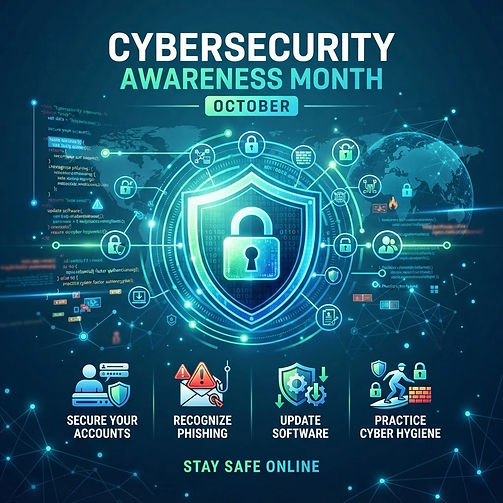
Over the past four weeks we've covered the basics worth checking, passwords and MFA, software updates, and backups and recovery. As the month wraps up, there's one question we hear more than any other: "This is a lot. Where do we actually start?"
It's a fair question. Security advice can feel endless, and most small organizations don't have a dedicated security team or an unlimited budget. The good news is that you don't need to do everything. A handful of habits, done consistently, cover the most ground.
Here's a practical baseline, in the order we'd tackle it.
1. Turn on multi-factor authentication everywhere that matters
Start with email, then financial accounts, cloud storage, and any system that holds sensitive data. A stolen password isn't enough on its own when MFA is on. If you only do one thing from this list, make it this one.
2. Keep everything updated
This includes laptops and desktops, but also firewalls, routers, POS systems, and the line-of-business software your team relies on. Turn on automatic updates where it's safe, and keep a short list of anything that can't be patched so you can plan to replace it.
3. Back up what matters, and test the restore
Know which systems are included, keep at least one copy isolated from your main network, and run a real restore test on a schedule. "We have backups" only counts if you can recover from them.
4. Train your people, and keep doing it
Most incidents start with a convincing email or a rushed click. Short, regular security awareness training, with occasional simulated phishing tests, turns your team into your first line of defense. One session a year isn't enough to build the habit.
5. Watch for trouble and know what you'll do about it
Protection works best when someone is watching for problems around the clock, and when you've decided in advance who gets called and what happens first if something goes wrong. Even a one-page incident plan puts you far ahead of making it up under pressure.
A few extras once the basics are in place
Remove accounts and access promptly when someone leaves
Limit administrator access to the people who truly need it
Keep a simple inventory of your devices and software
Review who has access to sensitive data once or twice a year
Write down your key vendors and how to reach them in an emergency
A quick self-check
Ask yourself honestly:
Is MFA turned on for email and financial accounts?
When was the last time our systems and network equipment were updated?
When did we last restore data from a backup as a test?
When did our team last receive security training?
If something went wrong tonight, would anyone know who to call?
If you can answer "yes" and "recently" to all five, you're in good shape. If a few of them gave you pause, that's your starting list.
Awareness Doesn't End on October 31
Cybersecurity Awareness Month is a useful nudge, but security isn't a once-a-year project. The organizations that stay protected are the ones that treat these habits as routine: small, steady, and reviewed regularly.
If you'd like a second set of eyes on where you stand, we offer a free IT and security health check: a short, plain-English review with a one-page scorecard and your top five priorities. There's no obligation, and you keep the results either way.
Thank you for following along this October. Call us at 1-866-906-6219 or visit www.senttechsolutions.com
Sentinel Technology Solutions helps healthcare, hospitality, and nonprofit organizations build IT environments that are secure, compliant, and resilient.


Comments